Home / Platform / Policy Builder

Policy Builder

Set the rules once.
Lupa acts automatically.

Most brands have a price policy. Far fewer can enforce it. The gap between the two is not a drafting problem — it is a visibility and routing problem, and it is solvable.

The policy builder is where you codify your price policies and distribution agreements as machine-readable rules. Every trigger — a price violation, an unauthorised seller appearing, a cross-border listing found — is checked against those rules and mapped to the action you defined.
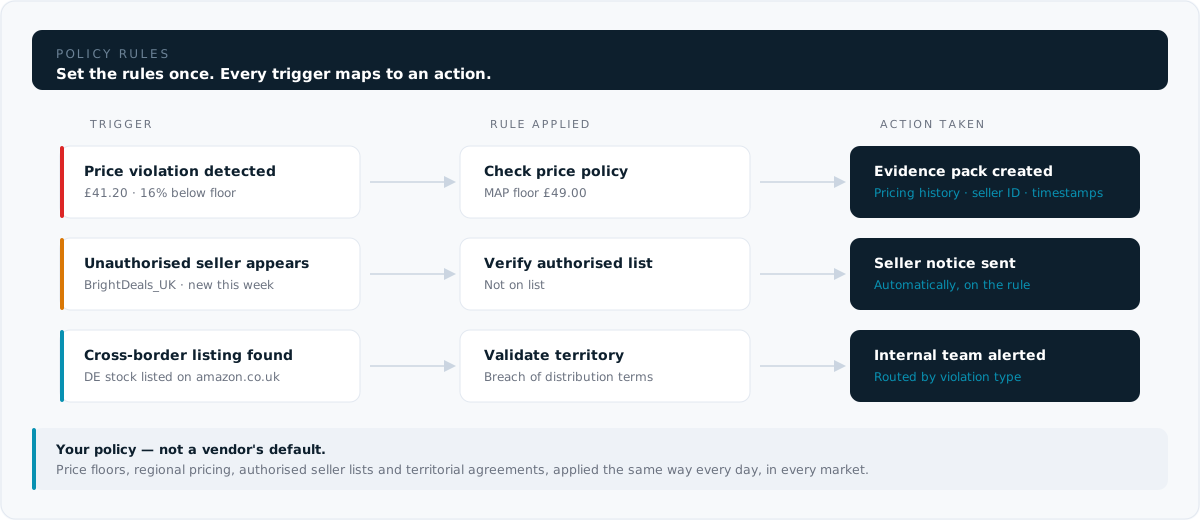
Three rows showing trigger, rule applied and action taken for price violations, unauthorised sellers and cross-border listings
Trigger, rule, action. Each seller type gets the response you defined, without anyone routing it by hand.

Trigger, rule, action

A price violation is detected, checked against your price policy, and an evidence pack is created. An unauthorised seller appears, is verified against your authorised seller list, and a seller communication goes out. A cross-border listing is found, validated against your territorial agreements, and the internal team is alerted. Each seller type gets the appropriate action, without anyone routing it by hand.

Your policy, not a generic template

Price floors, regional pricing, authorised seller lists, territorial distribution agreements — the rules reflect the commitments you actually made to your partners, not a vendor's default settings.

Enforceable because it is evidenced

A policy is only enforceable where you can demonstrate who breached it, when, at what price, and for how long. Every rule that fires produces that record automatically.

Consistency across markets

The same policy applied the same way across every marketplace and every seller, every day — which is the part that manual enforcement can never sustain.

Frequently asked

Questions about this.

What is Lupa's policy builder?

The policy builder lets brands codify their price policies and distribution agreements as rules once. Every relevant trigger — a price violation, an unauthorised seller appearing, a cross-border listing being found — is checked against those rules, and the right action follows: an evidence pack is created, a seller communication is sent, or the internal team is alerted.

Why do most price policies fail?

Most price policies fail for want of evidence, not for want of drafting. A policy is enforceable only where the brand can demonstrate who breached it, when, at what price, and for how long. Without daily visibility across every channel, violations are invisible until the damage is done.

Can rules differ by market or seller type?

Yes. Rules reflect your actual commitments — price floors, regional pricing, authorised seller lists and territorial distribution agreements — so a cross-border listing in one market and an unauthorised seller in another can trigger entirely different actions.

Explore the platform

See your brand's blind spots.

Request a sample brand report and we will show you exactly what Lupa can see on your products across every channel we monitor.

Request a sample report